How to Clean Vinyl Records at Home (Without Damaging Them)
This post contains affiliate links. As an Amazon Associate, Retro Tech Gadgets earns from qualifying purchases. If you buy through one of our links we may earn a small commission at no extra cost to you. Read our full disclosure.
That crackle on your records? A lot of it isn’t wear. It’s dirt. Dust, fingerprints, and in the case of thrift store finds, decades of who-knows-what packed into the grooves.
Clean records sound better, skip less and wear your stylus less. And it’s easy. Here’s how to do it at home, from a quick wipe before every play to a deep clean for crusty used vinyl.
The Everyday Clean: A Carbon Fiber Brush
Before every play, give the record a few spins under a carbon fiber record brush. Hold it lightly on the spinning record for a couple of rotations, then slowly angle it off to sweep the dust away. Five seconds. That alone keeps most records sounding clean.
The Deep Clean: Wet Cleaning
For used records or anything that sounds crackly, you need a wet clean. Here are your options from cheapest to fanciest.
Option 1: A Record Cleaning Kit
A basic vinyl record cleaning kit comes with a cleaning solution and a velvet or microfiber pad. Spray, wipe gently in a circle following the grooves, then dry with a clean microfiber cloth. Good for light cleaning.
Option 2: A Spin-Clean Style Washer
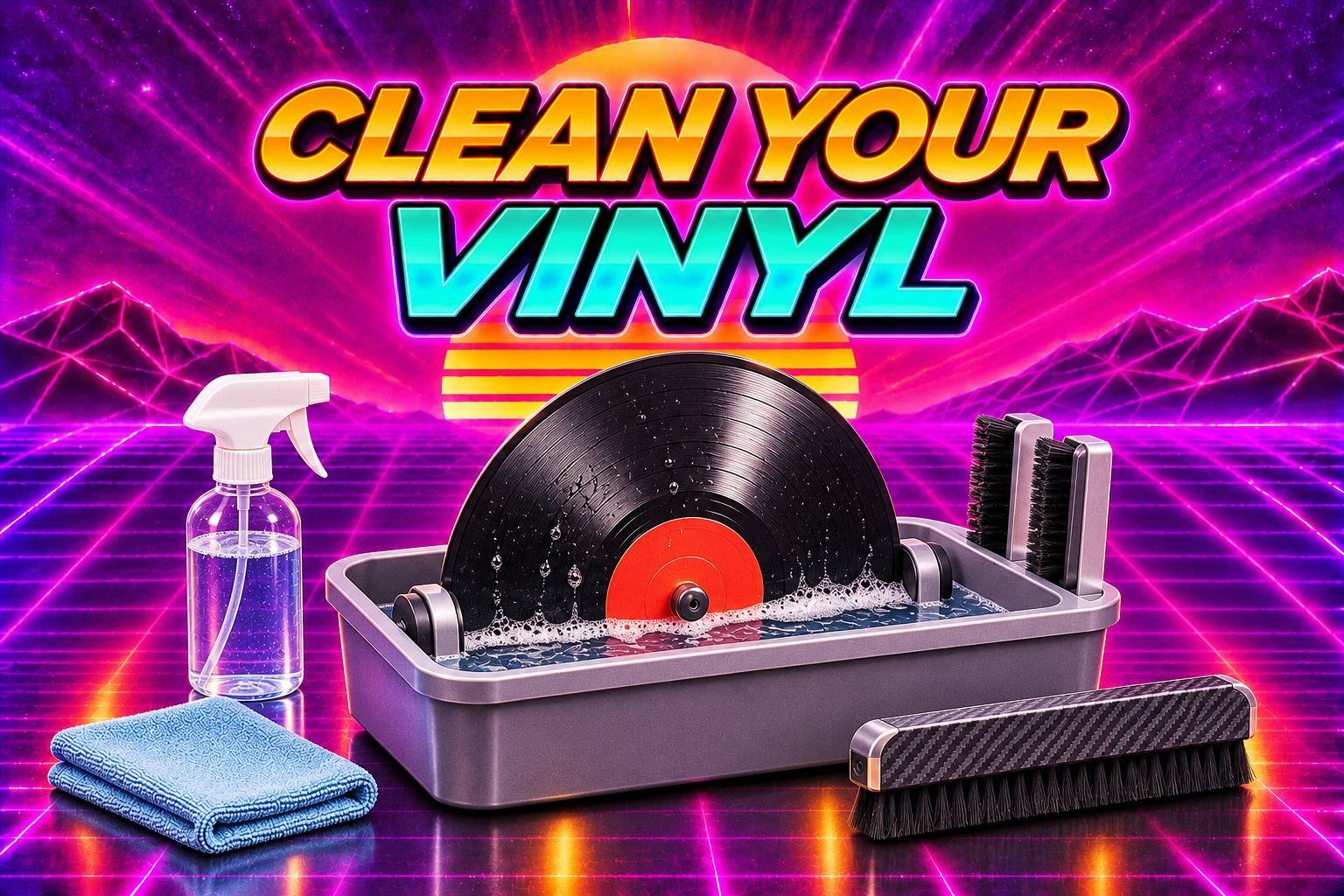
This is the sweet spot for most collectors. A record washer bath is a small basin with brushes on each side. You fill it with distilled water and a few drops of the cleaning fluid, roll the record through it a few times, then dry it. It handles a stack of records in an afternoon and gets out grime a pad can’t touch.
Option 3: Ultrasonic Cleaners
The serious option. Ultrasonic cleaners use sound waves to shake dirt out of the deepest parts of the groove. They work incredibly well and cost real money. Worth it if you buy a lot of used vinyl. Overkill if you mostly buy new.
What Not to Use
Skip household cleaners, dish soap with lotions or dyes, and paper towels (they scratch and leave lint). Use distilled water instead of tap water, which leaves mineral spots. And be careful with old 78 RPM records. Many are made of shellac, and alcohol-based cleaners can damage them.
Drying and Putting Them Away
Let records air dry on a record drying rack or dry them with a clean microfiber cloth. Then put them in fresh anti-static inner sleeves. Putting a clean record back into a dusty old paper sleeve undoes half your work.
Don’t Forget the Needle
A clean record played with a dirty stylus still sounds rough. Brush the needle gently from back to front with a stylus cleaning brush every few plays.
Still hearing pops and skips after a good clean? The problem might be your setup. Check our guide to fixing a skipping record player.
FAQ
What’s the best way to clean vinyl records at home?
A carbon fiber brush before every play, plus a wet clean with a record washer or cleaning kit for dirty or used records.
Can I clean records with water?
Yes, but use distilled water. Tap water leaves mineral deposits in the grooves.
Is it safe to use dish soap on records?
A tiny drop of plain dish soap is a common DIY trick, but soaps with lotions or dyes can leave residue. A proper record cleaning fluid is safer.
How often should I clean my records?
Brush them before every play, and deep clean used records once when you buy them and again whenever they start sounding noisy.
Can cleaning fix a scratched record?
Cleaning removes dirt that sounds like scratches, but it can’t fix real scratches in the groove.